There is a very common situation in any business: a person visits your website, looks at a service, compares prices, even gets to the form... and leaves without contacting you. It's not always a loss. If you understand what remarketing is, you will see that many of those visits can still be converted into sales.
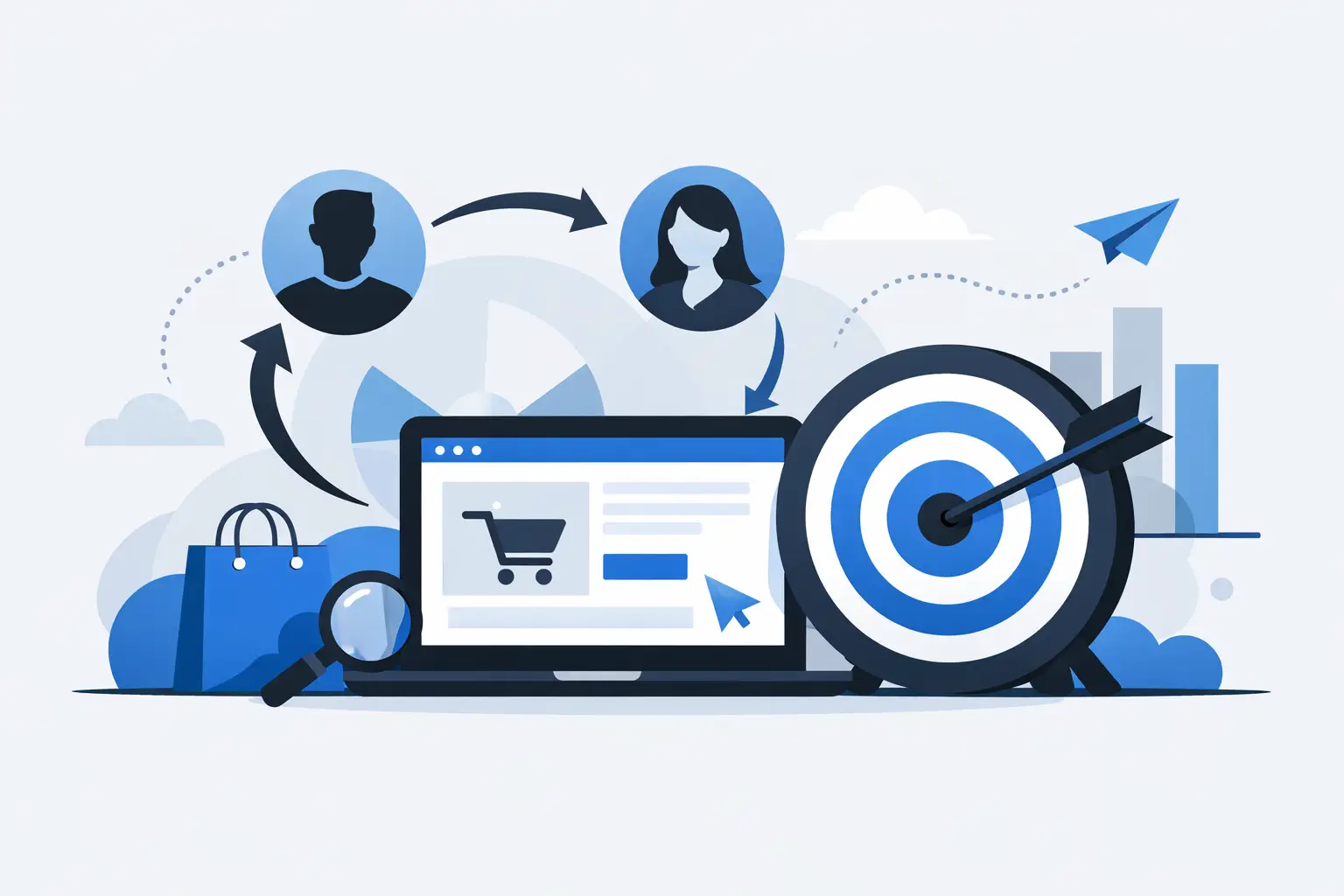
Remarketing is an advertising strategy that allows you to show ads to users who have already interacted with your business. They have entered your website, viewed a product page, added something to their cart or visited a specific page. Instead of retargeting a completely cold audience, you're retargeting someone who already knows you. And that, when done well, usually translates into more profitable campaigns.
It's not about chasing anyone over the internet. It's about being there at the right time to help a pending decision move forward. That difference seems small, but it completely changes the outcome.
What is remarketing in digital marketing?
When we talk about what remarketing is in digital marketing, we are talking about a technique aimed at recovering opportunities that already exist. In other words, people who have shown real interest, but have not yet taken the final step.
In simple terms, it works through audiences. These audiences are created based on user behaviour: visiting a page, staying a certain amount of time on the site, initiating a purchase, downloading a resource or interacting with a previous ad. Then, platforms such as Google Ads o Meta Ads allow specific messages to be shown to those users.
The logic is clear. Convincing someone who has already had contact with your brand usually requires less effort than capturing the attention of someone who doesn't know who you are. That's why remarketing is such a good fit for businesses that need to make the most of their traffic, especially when they're already investing in SEO, paid campaigns or social networks.
How remarketing works in practice
The technical process may seem complex at first, but the approach is fairly straightforward. First, a tracking tag or pixel is installed on the website. This tag registers certain actions and allows users to be grouped according to their behaviour. Then, targeted campaigns are created for each group.
For example, it doesn't make much sense to show the same ad to someone who has only visited the home page as to someone who has reached the price page. Nor does it make sense to speak in the same way to someone who abandoned a shopping cart as to someone who filled out half a contact form. Remarketing works best when the message is adapted to the level of intent.
A local service business can use it to re-engage users who have visited a landing page for treatments, renovations, advice or bookings. An online shop can recover abandoned carts. A B2B company can reactivate visitors who have enquired about high-value services but have not yet requested a quote. The tool is the same. What changes is the strategy.
What types of remarketing exist
It's worth bringing the concept down to earth here, because not all remarketing pursues the same goal. The best known is display remarketing, where ads appear on websites, apps or videos to users who have already visited your site. It is the most visible format and also the most noticeable when it is poorly implemented.
There is also search remarketing, which allows you to adjust bids or messages when someone who has already interacted with you searches Google again. This type of remarketing is often very useful when the decision process is lengthy or there is a lot of comparison between providers.
In ecommerce, it is worth highlighting the dynamic remarketing. In this case, the user sees ads for the exact products they have searched for. It is very effective, but also requires careful configuration so as not to be invasive.
In social media, especially on Meta, remarketing allows you to retarget users who have visited your website, interacted with posts, watched videos or sent messages. For many businesses, this format works especially well because it accompanies the user in an environment where they spend time every day.
When it pays to use remarketing
Not all businesses need to start here, and to say otherwise would be selling smoke. Remarketing needs a minimum base of traffic or interaction to generate useful audiences. If your website hardly receives any visitors, you probably need to work on acquisition first.
However, when you already have movement on the web or active campaigns, remarketing is usually one of the most sensible actions. It helps to get a better return on the previous investment and to avoid losing traffic that has already been hard to get.
It tends to fit particularly well when the service is not contracted impulsively, when the customer compares several options or when there are common objections such as price, trust or timing. In these cases, re-emerging with a more specific message can make a difference.
The real benefits of remarketing
The main advantage is not just selling more. It is to sell more efficiently. Because you impact an audience that has already shown interest, the likelihood of response is usually higher than in cold campaigns.
It also allows for better segmentation. You can separate audiences by intent, by type of service visited or by stage of the business process. This personalisation improves ad relevance and avoids wasting budget.
It also reinforces brand recall. In competitive markets, where several businesses offer something similar, well-measured repetition helps to keep you in the customer's mind. And that nuance matters a lot in local, tourism, professional services or retail sectors, where the decision is often not made on the first visit.
However, it must be made clear: it does not always generate immediate conversions. Sometimes its value is in assisting the sale, reinforcing trust or pushing a second click that then ends up being closed by another route. Measuring it well is as important as activating it.
The most common mistakes in remarketing
The first is to hit everyone with the same ad. This often results in low relevance, poor performance and a feeling of repetitive advertising. If everyone sees the same thing, remarketing loses one of its greatest advantages.
The second mistake is to insist too much. There are campaigns that seem designed to exhaust the user. Excessive frequency damages brand perception and reduces effectiveness. Being present does not mean saturating.
Another common failure is not excluding conversions that have already taken place. If someone has already made a purchase or submitted a form, continuing to show them the same advert makes no sense. From that point on, you should enter into a different commercial logic, more oriented towards loyalty, upselling or brand reminders.
Creativity also fails a lot. There are companies that invest in segmentation and then launch generic ads, without a clear proposal, without urgency and without a convincing call to action. Remarketing does not compensate for a weak message.
How to make a remarketing campaign work better
The key is to align three things: audience, message and timing. If a person has visited a page for a specific service, the ad should talk about that service and resolve the most likely question. If they have abandoned a purchase, you should remind them of the product with a clear and straightforward proposition.
It also works well to work with different time windows. A user who visited your website yesterday does not react in the same way as a user who visited it 25 days ago. In many cases, the more recent the interaction, the more direct the message can be. As time goes by, you may want to reinforce trust or come up with a different angle.
The subsequent experience also counts. A good ad is of little use if the user arrives at a slow, confusing or unconvincing page. Remarketing improves results when it is part of a well thought-out system, not when it tries to fix a website that doesn't convert on its own.
At AIRIS Agency we see this often with businesses that are already investing in acquisition but are not fully capitalising on the traffic they generate. The problem is not always bringing in more visitors. Sometimes it is to work better with the ones that already exist.
Remarketing, retargeting and privacy: what you need to be clear on
Remarketing and retargeting are often used as synonyms. In practice, almost everyone nowadays mixes them up, and that's fine. If we want to be precise, retargeting is more associated with cookie or pixel-based retargeting, while remarketing can also include email actions oriented to recover users. But in the everyday language of digital marketing, the difference has become blurred.
What really matters is the legal and privacy part. To work this strategy well, you need to set up your cookie consent correctly and comply with current regulations. It is not just a technical issue. It is also a matter of trust. And for any serious business, that trust is worth more than a one-off campaign.
Understanding what remarketing is is of little use if it is then used as an automatic tool without criteria. Well thought out, it helps to recover opportunities, improve ROI and accompany real purchase decisions. Poorly executed, it only adds noise. The difference is not in activating ads, but in knowing why you are showing them, to whom and for what purpose.